Brown Wedding Flowers: 18 Bouquets and Centerpieces in Chocolate Tones
Brown is the most underrated wedding flower color there is: toffee roses, chocolate cosmos, caramel dahlias. Here are 18 bouquets and centerpieces in chocolate tones, plus the exact flowers to ask your florist for.
By HappilyVowed Editors · October 18, 2026
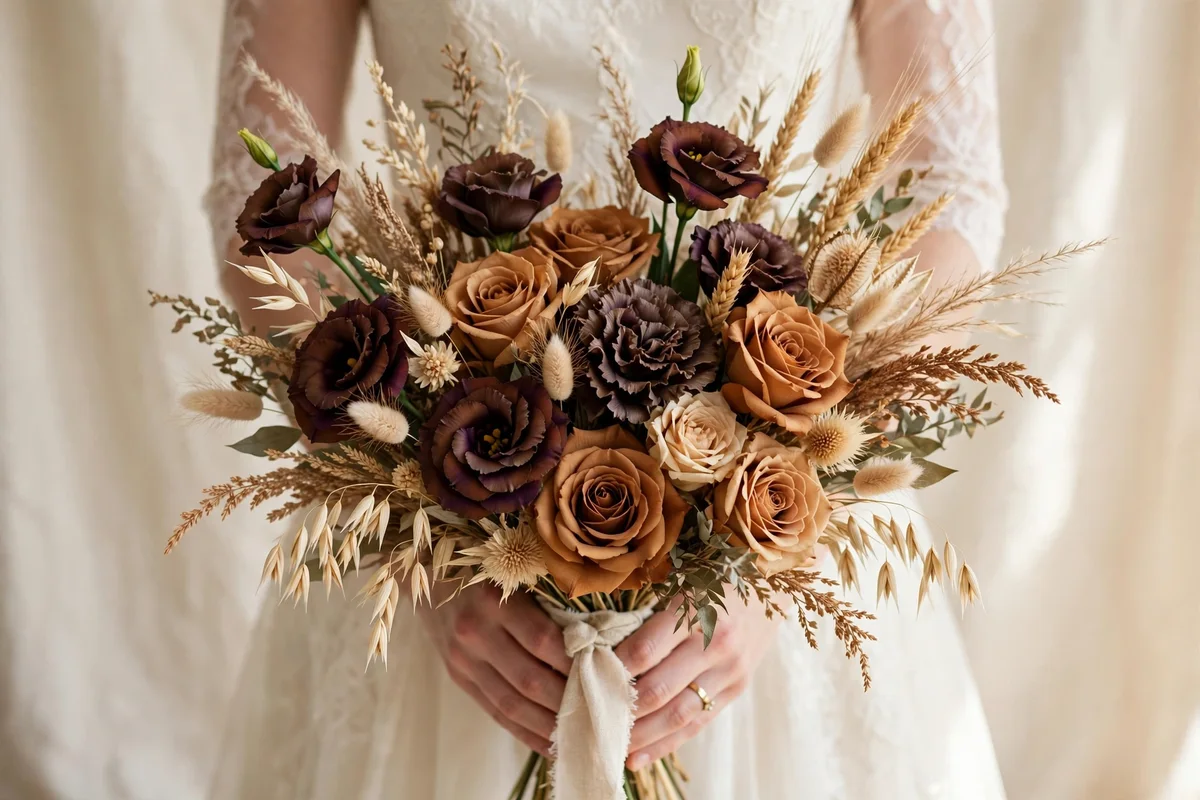
Yes, brown wedding flowers are real, and no, they are not dyed novelties. Some of the most beautiful varieties in a florist’s cooler are naturally chocolate, toffee, and caramel: roses bred in coffee tones, dahlias the color of dark caramel, cosmos that genuinely smells faintly of cocoa. The 18 designs below share one secret, and it is worth learning before any of them: brown only looks rich when it is mixed. Aim for about half light tones in every arrangement, vary the textures, and let candlelight or warm daylight do the rest. Everything here sits inside our wider collection of wedding bouquets and flower guides, from bouquet shapes matched to dress silhouettes to centerpiece heights that keep conversation easy.
Which flowers are actually brown?
Ask your florist for these by name, because “brown flowers” alone will get you a puzzled look and a bucket of whatever is left.
- Toffee and cappuccino roses. The backbone of this palette. Varieties sold as Toffee, Cappuccino, and Combo are bred in coffee and caramel tones and behave like any other rose.
- Chocolate cosmos. A true dark brown, almost black in bud, opening to a deep cocoa. Seasonal, usually summer into fall, and worth planning around.
- Brown lisianthus. Sold in antique and chocolate tones, with a ruffled shape that reads expensive and a vase life that outperforms most flowers here.
- Dahlias in caramel and bronze. Fall’s gift to this palette, from pale cafe au lait relatives deepening into bronze and dark caramel varieties.
- Amaranthus in biscuit and bronze. The trailing texture in half the designs below, fresh in fall or dried any time.
- Scabiosa and antique hellebores. Supporting players in dusty cocoa and faded plum brown tones that soften the gap between brown and blush.
- Dried elements. Bunny tails, pampas, preserved ruscus, and dried grasses carry brown tones cheaply, keep indefinitely, and add the matte texture fresh flowers cannot.
What do the best brown bouquets look like?
These nine bouquets cover the range from soft and romantic to properly moody. Each is listed with the pairing that keeps it glowing rather than heavy.
- Toffee roses with cream garden roses. The starter bouquet for this palette: half toffee, half cream, loose and garden gathered, tied with ivory ribbon.
- Chocolate cosmos over blush. Cosmos wired through blush garden roses so the dark flowers read as punctuation marks against the soft pink.
- Caramel dahlias with bunny tails. A fall bouquet with height and movement, the dried tails catching light above the dahlias.
- Brown lisianthus and ivory ranunculus. The most elegant option here: ruffles on ruffles, in a tight two tone recipe that suits formal dresses.
- The moody one. Dark dahlias, hanging amaranthus, and burgundy accents, for evening ceremonies and couples who want the flowers to have some drama.
- Cappuccino roses, kept minimal. One variety, one tone, bound with a long taupe silk ribbon. Proof that brown alone, at the right depth, needs nothing else.
- Wildflower style. Scabiosa, cosmos, grasses, and whatever the season adds, gathered loose. Best with simple dresses that let the texture speak.
- All dried. Pampas, preserved roses in antique tones, bleached ruscus, and grasses. Made months ahead, kept forever, and the friendliest bouquet on this list for a budget. It is also the natural bouquet for a courthouse day, where one small arrangement has to do all the work: our city hall wedding ideas on a small budget put a single beautiful bouquet near the top of the spend list.
- Chocolate and peach. Toffee roses brightened with peach ranunculus and apricot stock. The spring and summer way to wear this palette.
How do you style brown centerpieces without the table going dark?
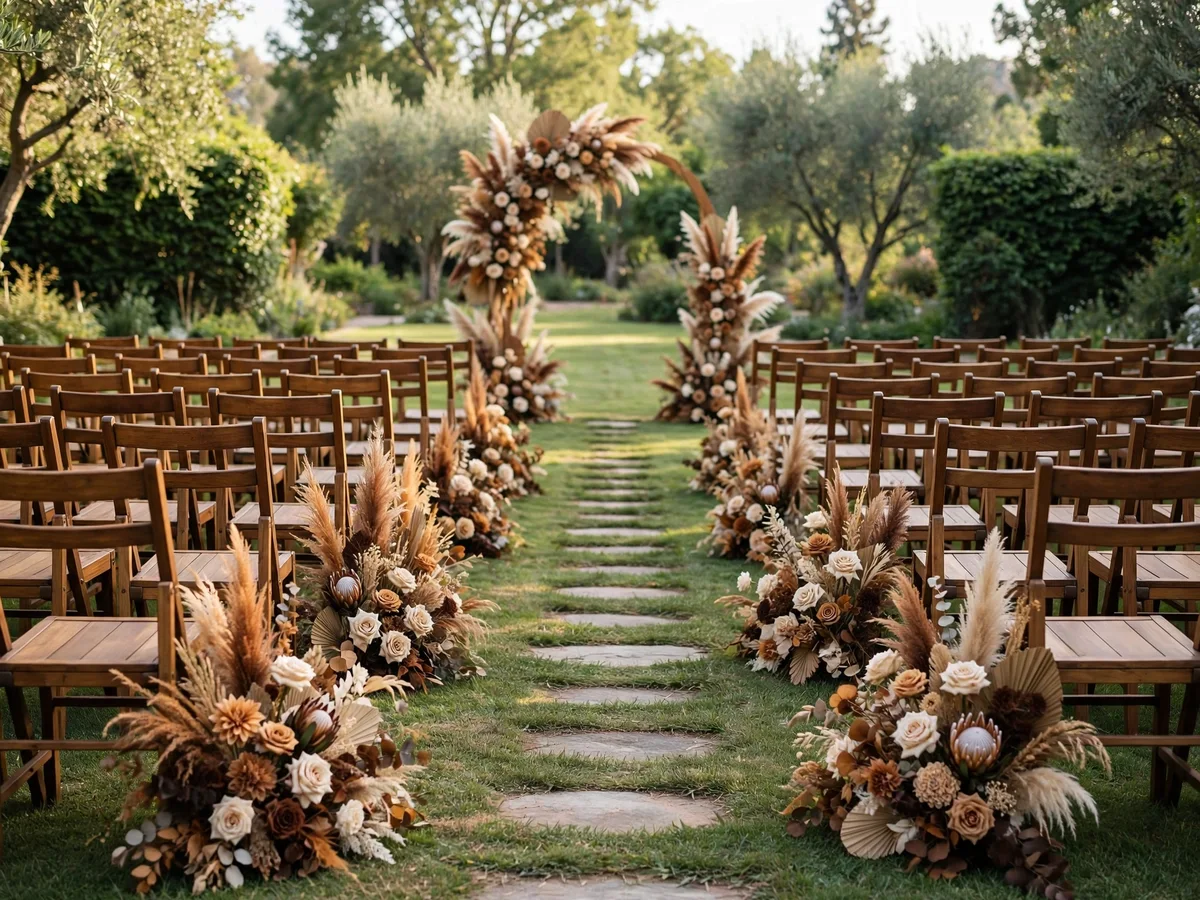
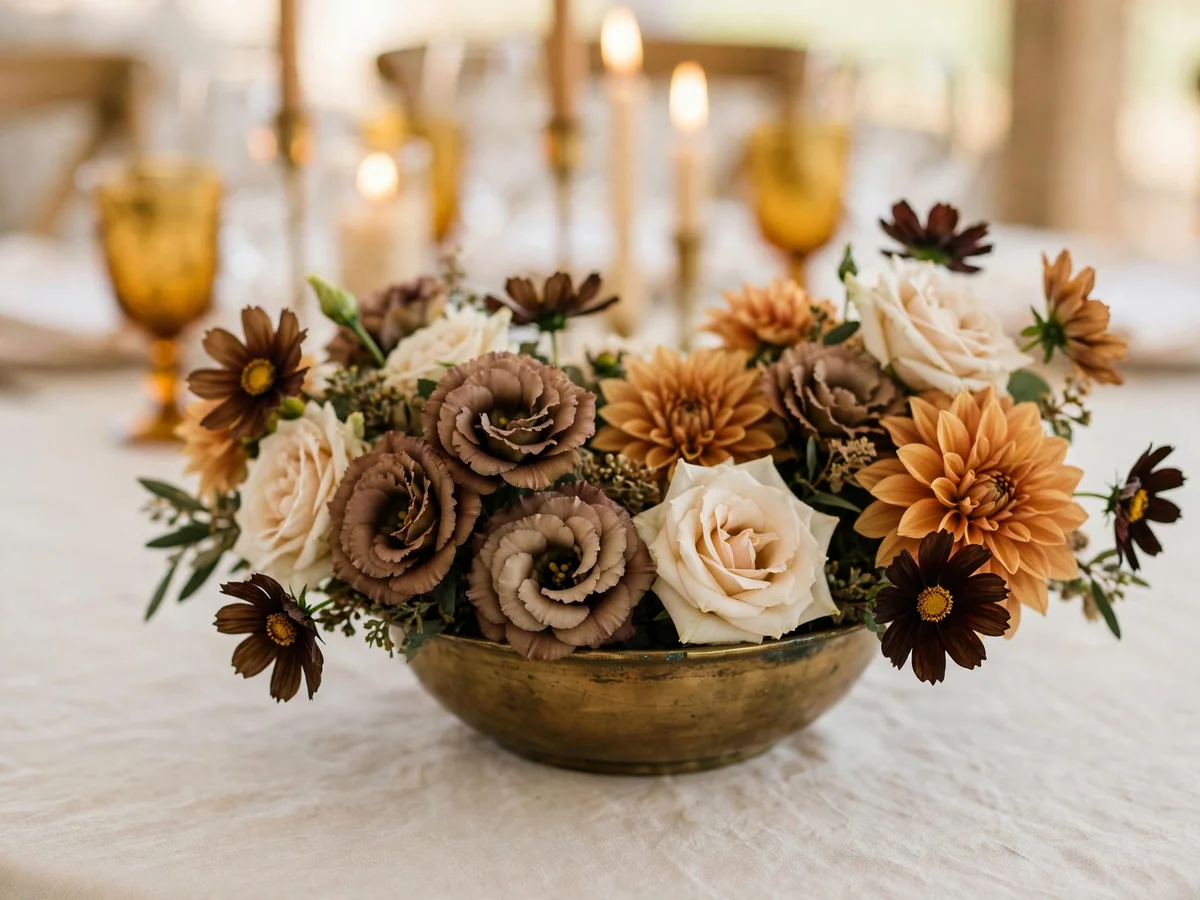
The same mixing rule applies, plus one more: keep centerpieces low or properly tall, never at eye level, and let reflective surfaces, glass, brass, candlelight, break up the brown. These nine are ordered from the simplest table to the most dramatic.
- Low compote of toffee roses and cream lisianthus. The classic centerpiece shape in this palette’s two friendliest flowers, in a brass or stone bowl.
- Caramel dahlias with amber glass. Dahlias in footed vases, surrounded by amber votives. Once the candles are lit the whole table turns to caramel.
- Dried grass clouds. Pampas and grasses arranged in low clouds along the table, with taper candles in between. Almost no fresh flower cost at all.
- Brown and blush. Toffee roses with blush stock and garden roses, the reception version of bouquet two, and the easiest sell for couples nervous about brown.
- Bud vases of chocolate cosmos. Single stems in mismatched small vases down the center of the table. Intimate, modern, and each vase costs almost nothing.
- Draped amaranthus garland. A garland of greenery and hanging amaranthus with cream roses tucked in, for long banquet tables that need one continuous gesture.
- Terracotta pots with dahlias. Potted dahlias and herbs in terracotta for garden and outdoor weddings, doubling as decor guests can take home.
- Single stem minimalism. Mixed brown tones, one stem per vessel, a lot of vessels. Restraint that photographs like a magazine.
- Tall branches with hanging amaranthus. Height for rooms with high ceilings: branches in tall vessels, amaranthus falling, candles below. The drama piece, best used on a few tables rather than all.
What colors pair best with chocolate tones?
Cream and ivory are the essential partners, they are what stops brown reading as mud. After that, the palette opens in four directions. Blush and peach warm it toward romantic, and suit spring and summer. Sage and olive greenery keep it earthy and garden led, and cost nothing extra because the foliage is already there. If sage is doing more than foliage duty at your wedding, our sage green and gold wedding color palettes show the same pairing carried through dresses, tables, and stationery. Burgundy and plum push it moody for fall and evening. And gold and brass in the vessels, cutlery, and candle holders give brown the reflective partner that makes it read as luxury rather than rustic, unless rustic is exactly what you want, in which case choose wood and stone instead.
Brown is not the absence of color, it is the color of coffee, caramel, leather, and late afternoon light. Treat it like the rich neutral it is, give it light tones to lean on, and it will out photograph palettes twice its price.
How do you brief a florist on brown flowers without it going wrong?
Bring three things to the first meeting. First, photographs of the depth you mean, because “chocolate tones” spans everything from pale latte to near black, and your florist’s version may be two shades darker than yours. Second, your light tone, the cream, blush, or peach that will make up half the design, agreed as a fixed proportion rather than a garnish. Third, a short list of the named varieties from the top of this guide that you actually love, so substitutions stay inside the family when something is out of season. Then ask for a mock up of one bouquet or one centerpiece before the full order. Brown is the palette where a test arrangement earns its fee, because the difference between rich and muddy is a matter of small proportions, and those are far easier to adjust in a sample than on the morning of the wedding.
One last practical note on timing. Several of the stars here, chocolate cosmos and the best dahlias, are at their peak from late summer into fall, and florists plan their orders around weddings that ask early. If your heart is set on a particular variety, raise it at the first consultation rather than the last, and agree on a named substitute in the same tone family at the same time. That way a seasonal shortage becomes a quiet swap inside the palette, not a morning of phone calls and a bouquet that almost matches.
Questions, answered
Are brown flowers more expensive than regular wedding flowers? +
Some are. Specialty roses in toffee and cappuccino tones are premium varieties and cost more per stem than standard roses. The balance comes from dried elements: bunny tails, pampas, and preserved grasses are inexpensive, bought months ahead, and they carry a lot of the brown in these designs, which pulls the overall flower bill back down.
What season are brown wedding flowers best for? +
Fall is their natural home, when dahlias, amaranthus, and chocolate cosmos are in season and the light is warm. But the palette works all year: toffee roses and lisianthus are available in every season, and in summer the trick is simply to lift the mix with more cream and blush so it reads warm rather than heavy.
Will brown flowers look dead or muddy in photos? +
Not if you follow the one rule in this guide: roughly half of every arrangement should be a light tone, cream, ivory, or blush, and the browns should vary in texture. Glossy rose petals, matte dried grasses, and feathery cosmos photograph as three different colors. Brown fails when it is one flat tone with nothing light beside it.
Can you mix fresh and dried flowers in the same bouquet? +
Yes, and most of the bouquets here do exactly that. Dried elements go in for texture and tone, fresh flowers carry the shape and scent. Ask your florist to build the dried pieces so they can be made in advance, which also spreads the work and the cost over the months before the wedding.
What should bridesmaids carry if the bridal bouquet is brown? +
A lighter echo of it. Keep the same flower varieties but reverse the proportions: mostly cream and blush with a few toffee roses and a little dried grass. The bridal bouquet stays the deepest thing in the photos, and the set reads as one family instead of copies.